
How to Build an E-commerce Website in Ghana That Accepts Mobile Money
If checkout cannot take MoMo cleanly, you do not have an online store. You have a catalogue with hope.
Design and Development
Ghanaian shoppers will forgive an ordinary product photo. They will not forgive a checkout that fails after they have already approved a MoMo prompt.
An e-commerce website in Ghana is not a theme with a cart icon. It is a payment conversation, a delivery promise, and a finance reconciliation problem wearing a storefront.
We have watched brands spend on photography and ads, then lose the sale on a timeout. We have also watched a tightly scoped WooCommerce shop outperform a custom marketplace because the owner could add stock on a Tuesday without calling a developer.
This is how we think about online stores at PED—including work like Dujis. Use it before you buy a platform.
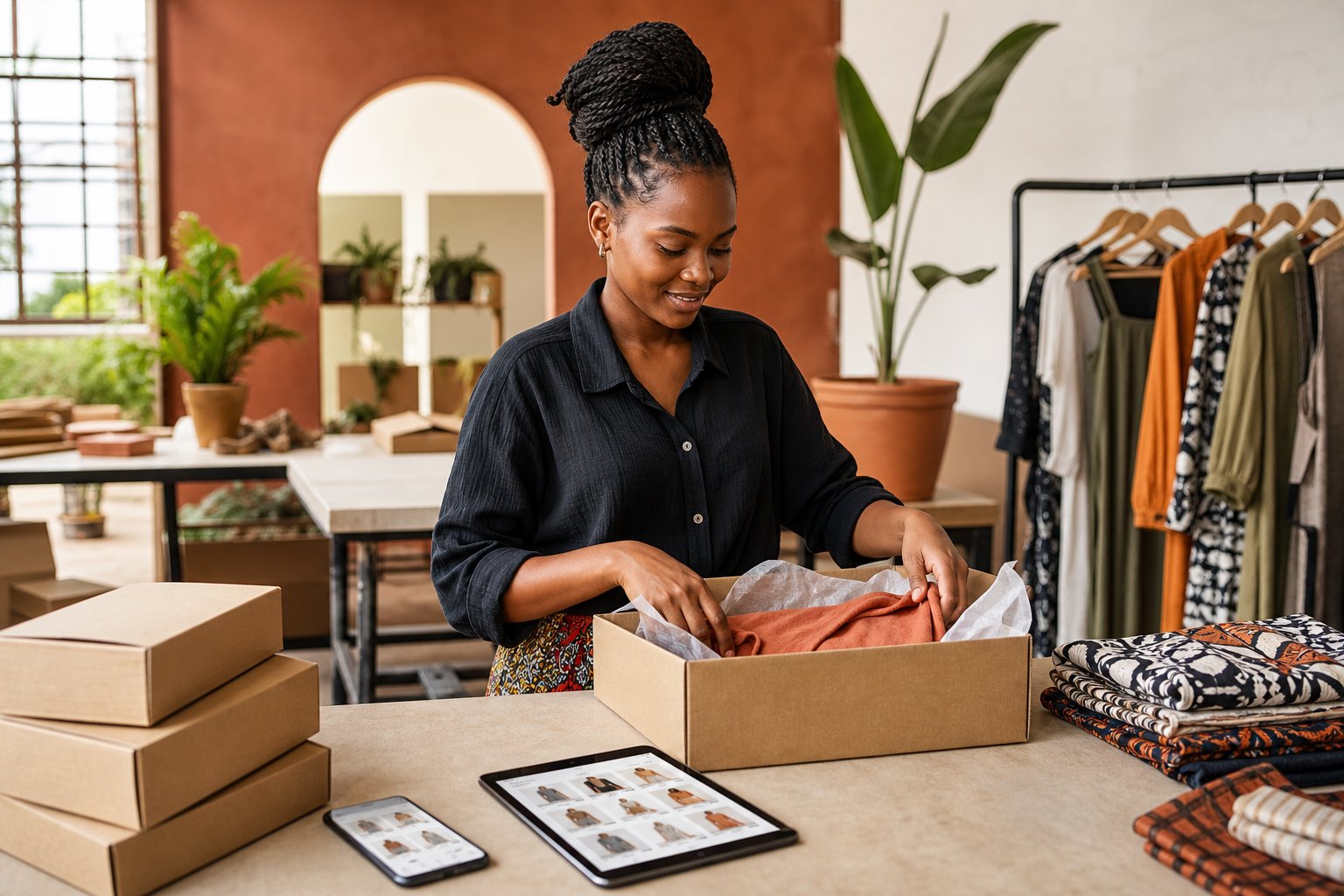
What "e-commerce" must mean here
Ghana's digital spend still leans on wallets. Industry reporting for 2025 put mobile money volumes in the trillions of cedis, with MTN MoMo as the centre of gravity. Cards and bank transfers exist. Cash on delivery has not died in every category.
So your store must answer, on the product page and at checkout:
Can I pay with my wallet?
When do I get the goods, and to which areas?
What happens if the prompt fails?
Who do I call that will actually pick up?
If those answers live only in a WhatsApp broadcast, your website is a brochure. That can be fine—see website design that converts—but do not call it e-commerce.
WooCommerce, Shopify, or custom?
WooCommerce (WordPress)
Still the default for many Ghana SMEs. You own the hosting. Paystack, Flutterwave, and others have mature plugins. Your team can edit products without a sprint.
Choose it for a standard catalogue, local hosting preference, and a content team that already knows WordPress.
Avoid it if you need a multi-vendor marketplace, complex wholesale rules, or a mobile app sharing the same cart logic. You will fight the platform.
Shopify
Fast to launch, strong admin, less server babysitting. The question is Ghana-specific: payment apps, payout currencies, and whether your operations team is comfortable living in a foreign SaaS.
Choose it if you want speed and can accept the platform's way of doing things.
Avoid it if lock-in, transaction economics, or a custom B2B flow will hurt in year two.
Custom
Laravel or similar, your checkout, your inventory rules. This is how you build a marketplace or a dealer portal—not how you sell 40 SKUs of shea butter.
Choose it when the store is the company, or when custom software already owns the stock truth.
Avoid it as an ego project. Custom checkout is where unpaid invoices go to die if you skip test payments.
We unpack the broader stack choice in website development in Ghana. Commerce just raises the stakes.
Payment rails: Paystack, Hubtel, Flutterwave, and friends
You need a Bank of Ghana-licensed (or properly partnered) gateway that supports MoMo and cards from one checkout.
Paystack is a common first choice for WooCommerce: documentation, plugins, MoMo plus cards, a mental model developers already know.
Hubtel is deeply local—useful when your operations already live in their world (POS, SMS, ussd-ish flows).
Flutterwave can make sense if you sell across more of Africa, not only Accra.
expressPay and others appear in specific bank or enterprise relationships.
Do not pick a gateway from a tweet. Pick it from settlement time, support, plugin quality, and whether your accountant can export something they trust.
Fees change. Read the current Ghana page before you promise a margin. We will not quote a percentage here that will be wrong next quarter.
Checkout UX that respects the wallet
The customer will leave your site for a prompt. Design that gap.
Show the amount in GHS with no surprise delivery shock on the last screen.
Say "approve the prompt on your phone" in human language.
Poll for status without a spinner that never ends.
Offer a "I have paid" path that creates a ticket, not a void.
Send an SMS or WhatsApp receipt. Email-only is optimistic.
COD can remain a method for categories where trust is still forming. Price it. Do not hide it and then argue with the rider.
Delivery is part of the product
Ghana is not a uniform last-mile. Accra-Tema is not Kumasi is not a regional capital with one reliable bus.
A serious store has:
Zones with honest fees and cut-off times.
A packing process someone owns.
A way to mark "out for delivery" that the customer can see or at least be told.
A return rule you are willing to honour.
If you only deliver through a cousin with a car, say so. Clarity converts better than a fake tracking number.
Inventory, promotions, and the festival spike
Ghanaian retail has pulses: pay week, festive seasons, school reopenings. Your store must let a human change a price and hide a SKU without opening a ticket. If a promotion needs a developer, you do not have e-commerce. You have a hostage situation.
Plan stock buffers for the SKUs you advertise. Nothing burns trust like a MoMo debit and an "out of stock" message the next morning.
Catalogue and SEO: how people find the product
Google is still how strangers discover a specialist shop. Marketplace ads are how they discover a commodity.
For organic:
One product, one URL, one clear title. "Men's leather sandal, size 42, Accra delivery" beats "Product 12."
Unique descriptions. Copied supplier text is how you compete with 80 identical pages.
Compressed images. Heavy galleries punish mobile users and technical SEO.
Category pages that read like a human wrote them.
Pair the store with digital marketing only after the checkout works. Ads into a broken MoMo flow are a donation to the ad network.
Operations you must staff
Someone must:
Update stock daily, or you will sell air.
Answer "where is my order" in under a business hour.
Reconcile gateway payouts to the bank.
Handle a dispute without deleting the customer's account.
Software cannot replace that person. It can make their Tuesday shorter.
Own store versus selling only on Instagram and marketplaces
Instagram and Jumia-style marketplaces are distribution. They are not your customer file.
An owned e-commerce website in Ghana is worth it when you have repeat SKUs, a brand people search for, or margins that cannot survive another platform fee. It is not worth it when you have twelve products, no packing process, and ads you cannot fulfil.
Many teams should run both: social for discovery, the site for checkout they control. The site must still take MoMo. Sending people back to "DM to order" after a paid click is how you pay for the same conversation twice.
Photos, variants, and the boring catalogue work
You do not need a studio the first month. You do need consistent light, a true colour, and the size or weight in the title.
Variants (size, colour, voltage) should be variants—not eight duplicate products that confuse Google and your stock count. This is catalogue design, and it is where cheap stores become expensive to run.
Write the first ten descriptions as if a sceptical aunt in Kumasi is reading them on a bus. If you would not say it on the phone, do not put it on the page.
Disputes, refunds, and the 9 p.m. message
Someone will pay the wrong amount. Someone will claim a prompt that never arrived. Someone will want a refund after the rider has left East Legon.
Write the policy before launch. Put a version of it near checkout. Give support a playbook that matches what the gateway can actually reverse. A pretty store with no refund path trains customers to chargeback or to trash you in the WhatsApp group that referred them.
Questions that save a failed launch
Do we need a mobile app as well as the store? Usually not at first. A fast mobile website with MoMo beats a thin shopping app. Add an app when repeat orders and push earn their keep. See mobile app development.
Should prices include delivery? Show the landed idea as early as you can. Surprise fees at the last step are a Ghanaian shopper's least favourite genre.
What about selling in Nigeria or Kenya from the same cart? Multi-country is a different product: currency, gateway, delivery, tax. Launch one country well.
Can we accept only MoMo? You can. You will lose diaspora and card-preferring buyers. Most stores should offer wallet plus card from day one if the gateway allows it.
A build sequence that does not embarrass you
Ten products, real photos, real prices, one city delivery.
One primary wallet plus cards.
Ten friendly customers, their own phones, their own networks.
Fix the three failures you will definitely see.
Then ads, then more SKUs, then a second city.
If you need a partner for the build—not a theme installer—website and development is where we scope stores, and start a project is the door.
An e-commerce website in Ghana that accepts mobile money is a promise: we can take your cedis and send the thing. Keep that promise smaller and truer than your mood board.
If you already sell through WhatsApp, do not throw that channel away on launch day. Use the site for people who want to browse and pay without a chat. Keep WhatsApp for the custom order and the nervous first-time buyer. The systems should share stock if you can manage it. If you cannot, sell a tighter catalogue online than you sell in chat until the counts match. Honesty beats a site that oversells.
PED Solution