
Mobile App Development in Ghana: Android-First, Mobile Money, and What to Budget
Most Ghanaian users live on Android and pay with a wallet. Build for that, or build a beautiful unused icon.
Design and Development
If your mobile app assumes a recent iPhone, a perfect 4G signal, and a Visa card, you did not build for Ghana. You built for the App Store screenshot.
Ghana is one of the more interesting places in West Africa to ship a consumer or field app. The market is huge on paper—tens of millions of mobile connections—and unforgiving in practice. People will install you, try the payment once, and delete you if the prompt fails.
This is the briefing we give founders and operations leads who ask PED for mobile app development in Ghana. It is not a framework war. It is a set of constraints: Android-first devices, mobile money, patchy connectivity, and a budget that should buy a first workflow, not a fantasy of "Uber for X."

Start with the job, not the store icons
An app is expensive to keep alive. You will pay for store listings, reviews, OS updates, and a backend that cannot nap. So the first question is not Flutter versus native. It is: why can't this be a fast mobile website or a WhatsApp flow?
Build an app when you need some combination of:
Repeat use several times a week (drivers, agents, patients, shop staff).
Device features: camera for KYC or stock, GPS for deliveries, push for time-sensitive jobs.
Offline or "bad network" behaviour that a browser tab will not forgive.
A logged-in relationship you intend to keep.
Do not build an app because a competitor has one, or because an investor likes the word. A conversion-minded website plus MoMo checkout will outperform a hollow app for many retailers. See e-commerce with mobile money.
Android-first is the default, not a compromise
Ask any mobile app developer in Accra what their users actually hold. Mid-range Android. Storage half full. A launcher full of telco and bank apps. iOS matters for a slice of affluent Accra and for some B2B managers. It is rarely the volume.
Android-first means:
Design and QA on the phones your customers own, not only on a studio flagship.
Respect storage. Fat video onboarding is a luxury.
Test permissions as they appear on older Android versions.
Treat iOS as a second target with a reason—unless your buyers are clearly iPhone-heavy.
If you need both stores, cross-platform is usually the sane path. If you need one store and deep hardware access, native can win. Do not pick native for both platforms on an SME budget unless the product is the company.
Flutter, React Native, or native?
We are not religious. We are allergic to fashion.
Flutter. Strong for custom UI, one team, and consistent design across Android and iOS. Good fit for many Ghanaian products where the interface is the differentiator and you want to move as one codebase.
React Native. Strong when your web team already thinks in React and you want to share talent. The risk is treating it like a website stuffed into a WebView. It is not.
Native Kotlin or Swift. Right when you have platform-specific performance needs, heavy background work, or a long-horizon product with a dedicated mobile team.
Progressive web app. Right when install friction is the enemy and you do not need store distribution yet. A PWA can be a phase-one product. It is a poor phase-one if you promised push-heavy field work on cheap devices.
The stack conversation should include the backend. An app without a boring, well-owned API is a marionette. That backend is often the same custom platform we discuss in website development choices.
Mobile money is a product surface
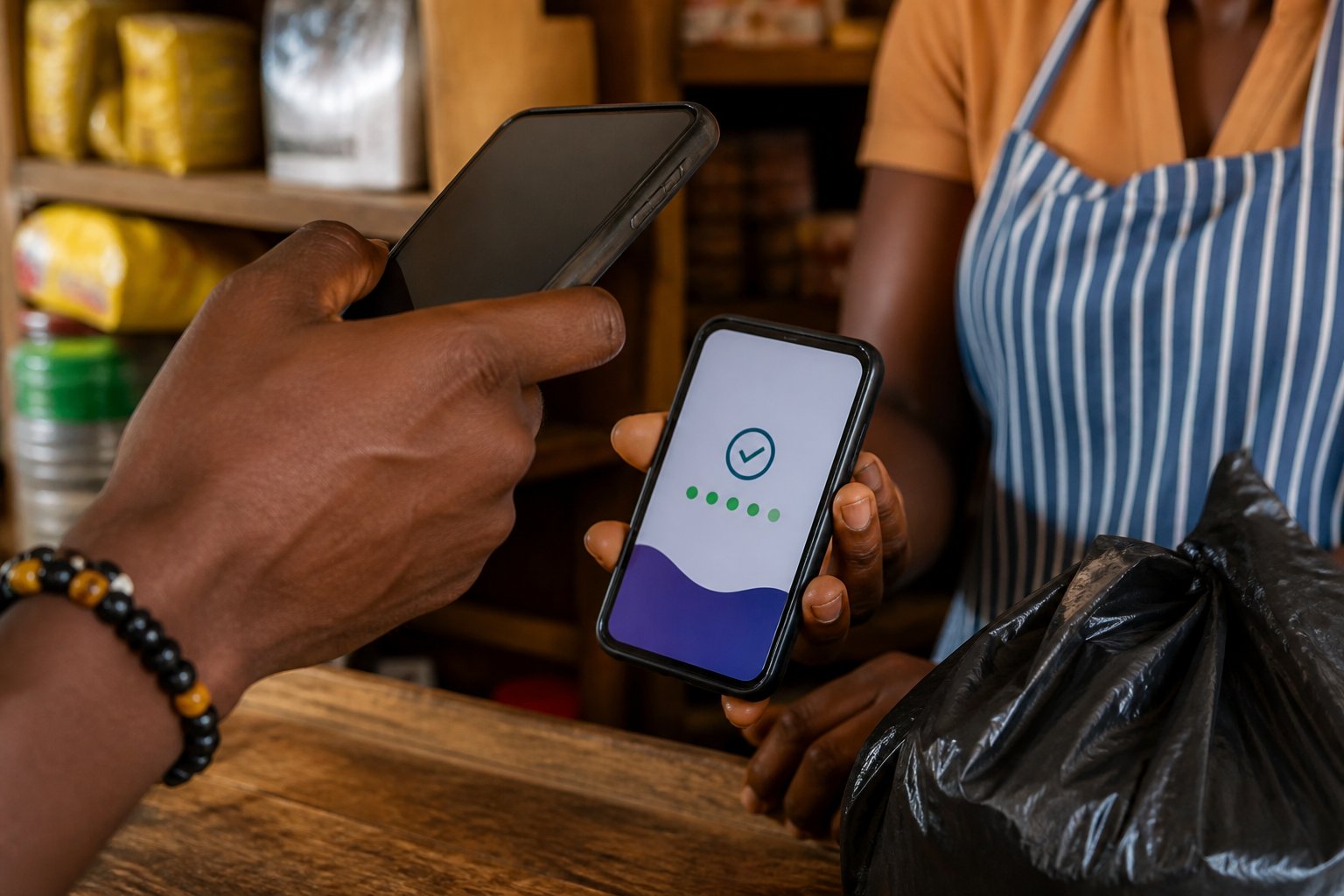
Ghana's payment story is not "add Stripe later." Wallets move the economy. MTN MoMo is the gravity well. Telecel Cash and AirtelTigo Money still matter depending on your audience. Cards appear for higher-ticket and diaspora buyers.
Your app must design for:
The USSD or prompt moment when the user leaves your UI.
Timeouts and "I paid but you did not see it."
A support path that finance and customer service can actually use.
Receipts a human can screenshot and trust.
Paystack, Hubtel, and Flutterwave are common rails. The integration is the easy paragraph in a proposal. Reconciliation is the hard chapter in month two.
Design for the network you have, not the one in the pitch deck
Field teams in Tamale, Tarkwa, or a warehouse basement do not experience your office fibre.
Build:
Optimistic UI with clear "pending" states.
Queued actions that retry without duplicating a payment.
Images that degrade. Maps that fail gracefully.
Copy that tells the user what to do when the telco is having a day.
This is not exotic engineering. It is respect. Movecord, Equipment Hub, and LifeLink are the kinds of products where a pretty empty state is not enough—the job still has to complete.
What to budget (market context, not a PED quote)
Ranges move with design, number of user roles, store submission, and whether you already have a backend.
A tight MVP (one audience, one job, Android-first, one payment method): think in phases over a few months, not a weekend hackathon. Many serious first versions in this market land in a mid-to-high five-figure cedi band once you include design, testing, and an admin. Smaller experiments exist. They usually skip the unglamorous parts and show it later.
Two-platform consumer app with wallets, notifications, and a real admin: plan for a larger envelope and a retainer. Stores will reject you for boring reasons. Budget time for that.
Enterprise / field app with offline, roles, and integrations: this is software, not "an app wrap." Price it like custom software.
Always separate launch cost from year-one cost. OS updates are not optional.
Questions founders ask before they regret the icon
Should we launch on iOS in version one? Only if your paying users are there. Many Ghana B2C products can prove the job on Android, then add iOS when the backend is stable. Dual-store vanity has killed more MVPs than a missing animation.
Can we wrap our website? A wrapper is not mobile app development. It is a bookmark with rejection risk and a worse keyboard. Use a PWA if you want install-without-store. Use a real app if you need device-grade behaviour.
What about Flutter for everything, including the admin? Possible. Often the admin is faster as a web app on a laptop in the office. Do not force a warehouse clerk and a finance lead onto the same UI pattern.
How do we handle USSD users? Some audiences still live there. An app will not replace USSD for everyone. Design the coexistence: the app for agents, USSD for the customer who will never download you.
How to hire mobile app developers in Ghana
Use the same spine as choosing a software company, plus app-specific questions:
Which Android versions and devices did you test on the last launch?
Who submits to Play Store and App Store, and whose accounts are those?
Show me a failed payment you had to debug.
What does week-two crash reporting look like?
How do you handle Data Protection Act issues if we collect IDs or health data?
If they cannot talk about review guidelines, they have not shipped.
The admin app is the product you forgot to budget
Every consumer or agent app has a second product: the dashboard where someone approves KYC, refunds a wallet, assigns a driver, or marks a clinic slot.
If you only design the pretty mobile screens, operations will run the company from a spreadsheet again by week three. Budget the admin, the roles, and the audit log as part of mobile app development—not as "phase two."
This is why we like one backend shared with a web application. Two clients, one truth.
Store submission is a project, not a Friday task
Google Play will ask for privacy policies, data safety forms, and screenshots that match the build. Apple will ask again, differently. A health or finance-flavoured app gets extra questions.
Own the developer accounts in the company's name. If the studio's personal Gmail owns your listing, you do not own your listing.
Plan a week of back-and-forth. Rejections are normal. Silence after a rejection is not.
Who should be in the room
Someone who does the job today (driver, nurse, agent, shop lead).
Someone who owns money (finance, not only "the intern who has Paystack").
Someone who will answer reviews and support chats after launch.
If only the founder and a designer attend, you will ship a pitch deck.
A sane sequence we recommend
Map the weekly job on paper. Time it.
Decide website, PWA, or store app with a reason.
Design the payment and the failure, not only the happy path.
Ship to a small group of real users on their own phones.
Only then buy the second platform, the referral scheme, and the animation pack.
If you want PED on that sequence, look at website and development and start a project. Bring the phones your customers use. We will design for those, not for the ones in the ad.
The best mobile app development in Ghana is boring in the right places: payments that settle, screens that work in the sun, and a team that still answers after the launch party.
If you are still deciding whether the first surface should even be an app, that indecision is useful. Write the weekly job on one page. Time it. If the job is "read our company profile," you want a website. If the job is "close three deliveries before 4 p.m. with bad signal," you want an app with an honest offline story. We will argue for the smaller thing when it is right. That is the point of a partner.
PED Solution