
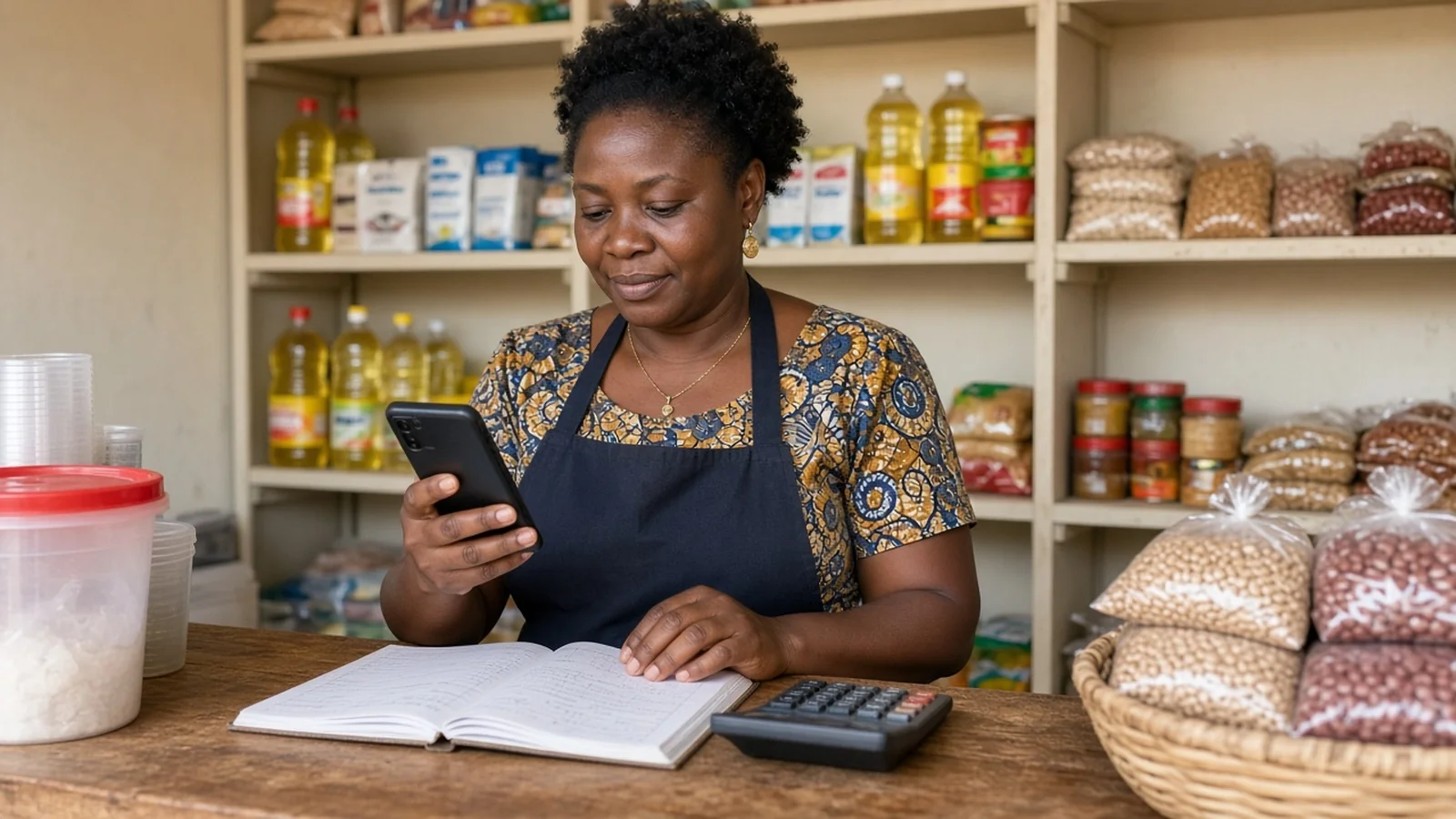
MoMo reconciliation means matching every mobile money payment in your wallet or merchant account to a recorded sale, every day. Record the transaction ID on each sale, check your own wallet history rather than the customer’s message, and compare each network separately. Anything unmatched gets chased the same day, not at month-end.
This guide is for owners, shop managers and finance staff in Accra, Kumasi, Tema and beyond who take MTN MoMo, Telecel Cash or AT Money and want the numbers to agree. It covers why payments and sales drift apart, a daily routine you can start tomorrow, the fields every sale record needs, and the point where a spreadsheet stops being enough. It is not accounting or legal advice.
Why MoMo reconciliation matters more in 2026
Mobile money is now how much of Ghana pays. The Bank of Ghana counted about 85.8 million registered mobile money accounts in August 2026, holding nearly GH¢40 billion in customer balances (Bank of Ghana, Governor’s remarks, 7 October 2026). MTN Ghana reported Mobile Money revenue of GH¢5.4 billion for the first nine months of 2026, up 24.4% on a year earlier (Graphic Online).
In the same October speech, the Governor said that at many merchant counters cash is still the default, and he called reconciliation “how an issuer proves, every single day, that its promise is good”. He was speaking to e-money issuers, but the point carries to any business: if you cannot show that each cedi you were paid matches a sale, you cannot trust your own figures.
Fraud makes it urgent. Business owners told Joy Business in January 2026 that fake payment alerts, reversal fraud and compromised agents had pushed some of them to stop accepting MoMo (MyJoyOnline). Traders in Accra told Citi Business News in July 2026 that fake MoMo alerts were making them reluctant to accept digital payments (Citi Newsroom). The Cyber Security Authority recorded GH¢209.7 million in cybercrime losses in the first nine months of 2026 (ITWeb Africa). Turning MoMo away loses sales. A routine that catches the gaps is the better answer.
Why MoMo payments and sales drift apart
When the wallet total and the sales book disagree, the cause is usually one of these:
- A fake alert or screenshot was accepted. The customer showed a message or a picture, and the goods left before anyone checked the wallet.
- A payment was reversed. The customer paid, collected the goods and later asked the network to reverse the transfer.
- The sale was never recorded, or was recorded as cash, or the payment went to a staff member’s personal number.
- Short payments. The customer sent GH¢95 on a GH¢100 sale, or did not add the charges, and nobody noticed at the counter.
- Networks mixed together. MTN MoMo, Telecel Cash and AT Money totals were added up as one figure, so a gap on one network is hidden by the others.
- Charges, cash-outs and transfers taken from the wallet but not written down, so the balance looks short when no sale is missing.
- Two identical amounts. Without a transaction ID on the sale, two GH¢50 payments look exactly the same.
None of these needs dishonesty to happen. A busy Saturday is enough. What they have in common is that they are easy to fix on the day and very hard to fix a month later.
A daily MoMo reconciliation routine you can start tomorrow
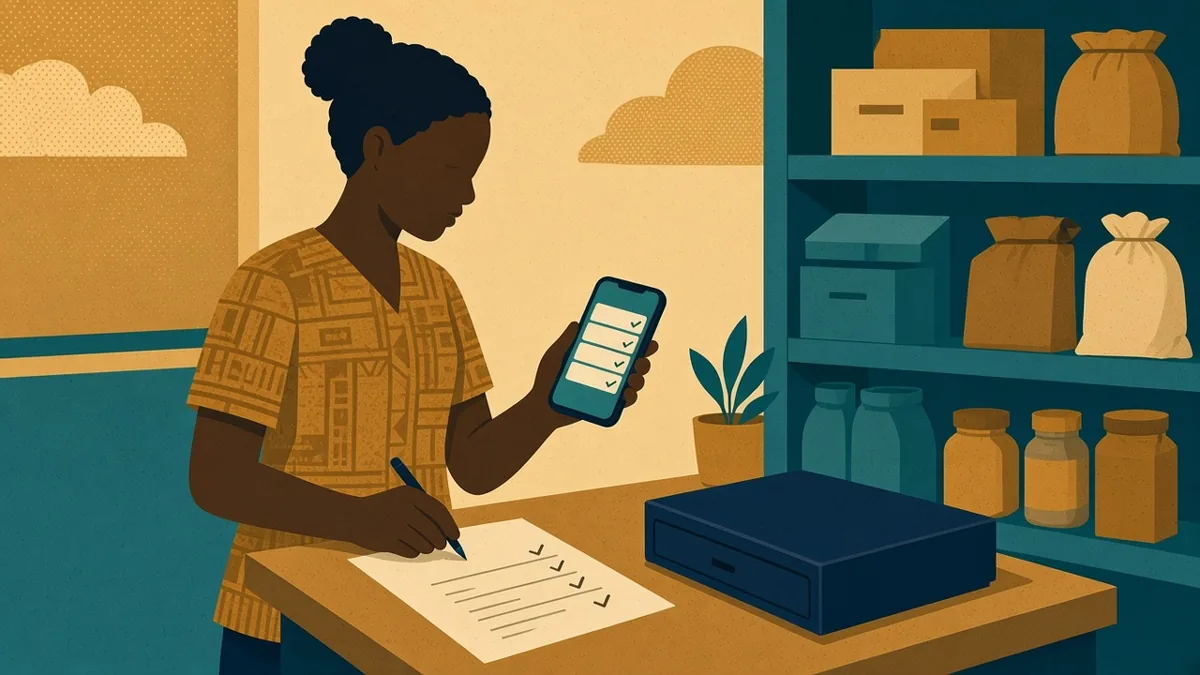
This works with a notebook, a spreadsheet or a POS. It takes minutes when done daily.
- Record as you sell. Every sale gets the amount, the payment method and the network. For MoMo, add the transaction ID and the sender’s name as they appear in your wallet.
- Close the till. Count the cash separately from MoMo, and remember any float you started with.
- Open each wallet’s history. Use your own app or USSD menu, or the merchant portal if you have one. Do one network at a time.
- Tick off by transaction ID. Go down the day’s MoMo sales and tick each ID you find in the wallet history.
- Look both ways. A sale with no matching payment needs chasing now, while the cashier remembers the customer. A payment with no matching sale is usually a sale someone forgot to record.
- Write down the leftovers. Charges, cash-outs, refunds and transfers to the bank each get their own line, so the wallet movement explains itself.
- Sign it off. One named person confirms the day matched, or lists what is still open. Patterns of small gaps on the same shift or till tell you where to look.
If you have more than one MoMo number, give each one a clear owner and never mix business and personal wallets.
What every sale record needs
The routine only works if the sale record carries enough detail to match. At minimum:
| Field | Why it matters |
|---|---|
| Date and time | Matches the timestamp in the wallet history |
| Amount in cedis | Exact match, so short payments show up |
| Payment method and network | MTN MoMo, Telecel Cash, AT Money, cash or card are checked separately |
| Transaction ID | The only reliable way to tell identical amounts apart |
| Sender name (from your wallet) | Confirms the payer, not the name on a screenshot |
| Till, branch and staff member | Shows where a gap started |
| Status | Paid, pending, failed, reversed or refunded |
Stopping fake alerts at the counter
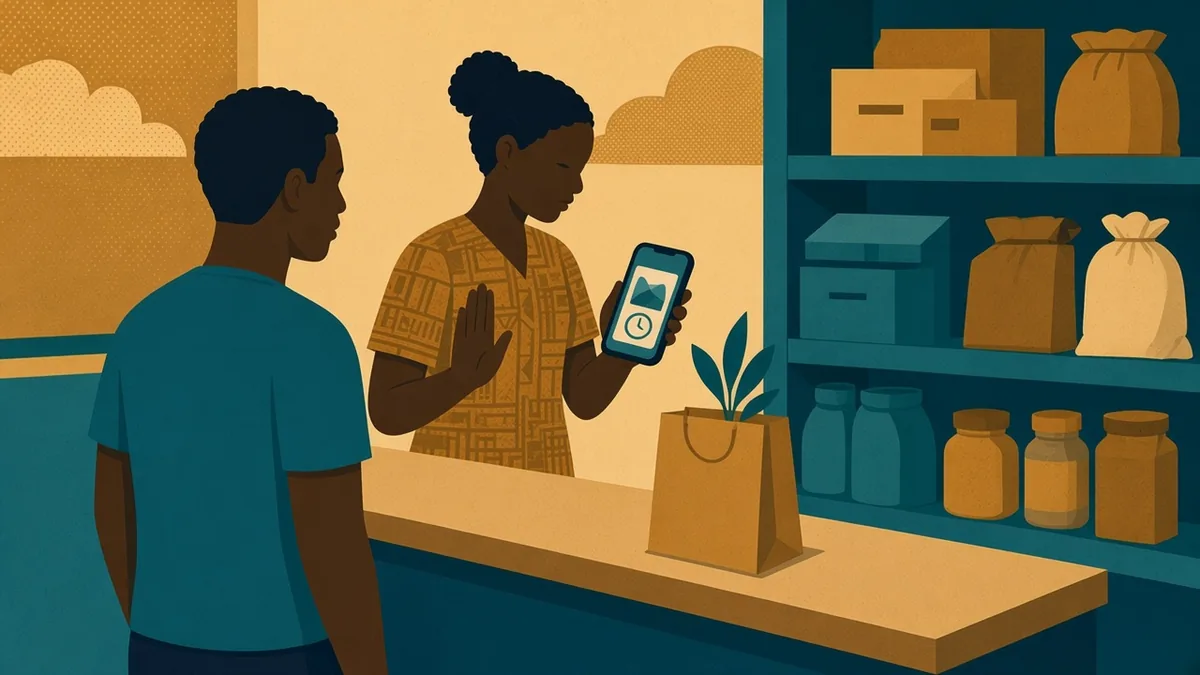
Reconciliation finds losses after the fact. Verification at the counter prevents them. Absa’s fraud guidance for Ghanaian businesses is plain: a screenshot, payment confirmation or SMS notification is not proof that funds have been received, so confirm the money is credited in your own account before releasing goods (Absa CIB Ghana). MTN’s advice to businesses, reported by Joy Business, is to keep your PIN to yourself, never let anyone transact on your behalf, and report suspicious numbers.
Practical rules for staff:
- Check the wallet, not the message. Put the rule on a card by the till.
- Match amount, name and time in your own wallet history before the goods leave.
- Write the transaction ID on the receipt or order at that moment.
- Never “reverse” a transfer using a code a customer reads out. Genuine mistakes are reported through the network.
- Give one person the business phone. If sales staff cannot see the wallet, someone who can must confirm each payment.
When a spreadsheet stops being enough
A notebook or spreadsheet is fine for one till and one wallet. It starts to fail when:
- You have several branches or tills, and nobody can see all of them at once.
- Riders collect payment on delivery, and the money arrives hours after the goods left.
- You sell online and in store, so the same customer can pay through a gateway link or straight to a MoMo number.
- Staff spend hours each week matching IDs by hand, and month-end becomes a hunt.
- You need an audit trail for a partner, lender or auditor that shows who confirmed each payment.
At that point the matching should be done by software, with people handling only the exceptions.
What MoMo reconciliation software actually does

When customers pay through a licensed payment gateway instead of to a personal number, every payment arrives with your own order reference attached. That changes reconciliation from guesswork into a match. A good system:
- Creates the order first, with its own reference, then sends the payment request through the gateway.
- Listens for the gateway’s confirmation (a webhook or callback) and also checks the status from the server, rather than trusting the customer’s browser or phone. Gateways report more than paid or not paid. Paystack’s documentation, for example, lists statuses including pending, failed, abandoned and reversed, and warns developers to make sure value is not delivered twice for the same transaction (Paystack docs).
- Matches automatically against the gateway’s settlement report, and puts anything unmatched in an exceptions list with the order, branch and staff member attached.
- Releases goods on confirmed status only, so the warehouse or rider app shows “paid” when the money is actually in.
- Shows each branch and network separately on one dashboard, with the day’s matched, pending and unmatched totals.
- Keeps an audit trail of who confirmed, refunded or overrode each payment.
- Feeds your accounting with clean daily totals instead of a pile of screenshots.
We cover the integration side, including callbacks, failures and choosing a gateway, in our guide to payment gateway integration in Ghana. For online stores, see e-commerce with mobile money.
Off-the-shelf POS or custom operations software?
If you run one or two shops with simple stock, a good off-the-shelf POS that records payment method and transaction ID may be all you need. Try that first.
Custom software earns its cost when reconciliation is tangled up with the rest of your operation: stock moving between branches, riders collecting on delivery, agents or sellers earning commission, or payments that must line up with orders across several apps. Our comparison of custom software and ready-made tools walks through that decision.
At PED Solution Studios we build operations software for Ghana businesses, including stock across branches, dispatch and MoMo reconciliation. We have integrated Hubtel and PaySwitch for mobile money. BYOB, a commerce and logistics platform we built in Accra, shows the kind of system where this matters: dispatch, warehouse, sales and rider apps reading the same orders from one system. If you only need a website that takes enquiries and WhatsApp chats, our business websites start from GH₵4,499.
Frequently asked questions
What is MoMo reconciliation?
It is the daily check that every mobile money payment you received matches a recorded sale, and every MoMo sale you recorded has a matching payment. Anything that does not match is investigated the same day.
How often should I reconcile mobile money payments?
Every day, at closing. A missing payment is easy to chase while the cashier remembers the customer, and much harder a month later.
Is a payment screenshot or SMS proof that I have been paid?
No. Screenshots and messages can be faked. The only proof is the payment showing in your own wallet or merchant account history, for the exact amount, with the sender’s name and a transaction ID.
Do I need software to reconcile MoMo payments?
Not at first. One till and one wallet can be handled with a sales book or spreadsheet that records the transaction ID. Software makes sense when you have several branches, delivery collections, online and in-store sales, or hours of manual matching each week.
Can MoMo reconciliation be automated?
Yes, when customers pay through a payment gateway linked to your orders. The system confirms each payment from the gateway, matches it to the order, and lists only the exceptions for staff to review.
Get your payments and sales to agree
Start the daily routine this week and note where the gaps keep appearing. If they come from branches, riders or several systems that do not talk to each other, book a call. We will tell you plainly whether a better routine, an off-the-shelf POS or custom software is the right fix.